 DeepTranslate
Beginner's Guide: How to Write English Emails | Basic Structure and Examples
Even if English is difficult, emails are understood in your language
One-click bilingual display of English emails
With the advancement of IT technology and the globalization of business today, more and more people are working with overseas colleagues.
In such situations, language can be challenging. If you haven't seriously studied languages, receiving emails in languages other than your native tongue can be intimidating.
Especially since many people feel that English is difficult, you'd want to translate smoothly if possible.
So in this article, we'll explain "how to write English emails." We also introduce tools that can dramatically improve your English email exchanges, so please use this as a reference.
Write English Emails Without Research Using DeepTranslate
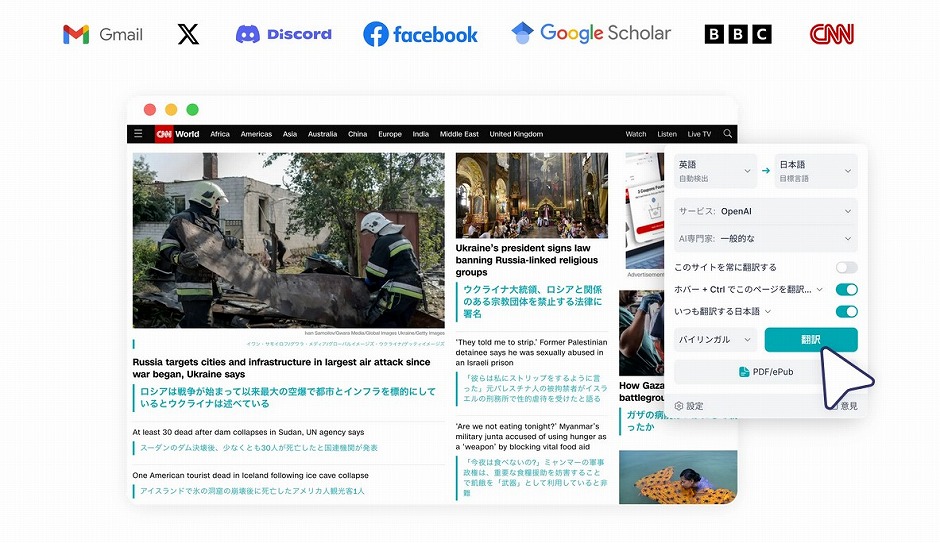
Everyone feels intimidated when receiving an email entirely in English. Even if you studied hard during your student days, it's different when you actually see it.
For such times, we recommend the Google Chrome extension "DeepTranslate". Once installed in your browser, it's immediately available as a translation tool.
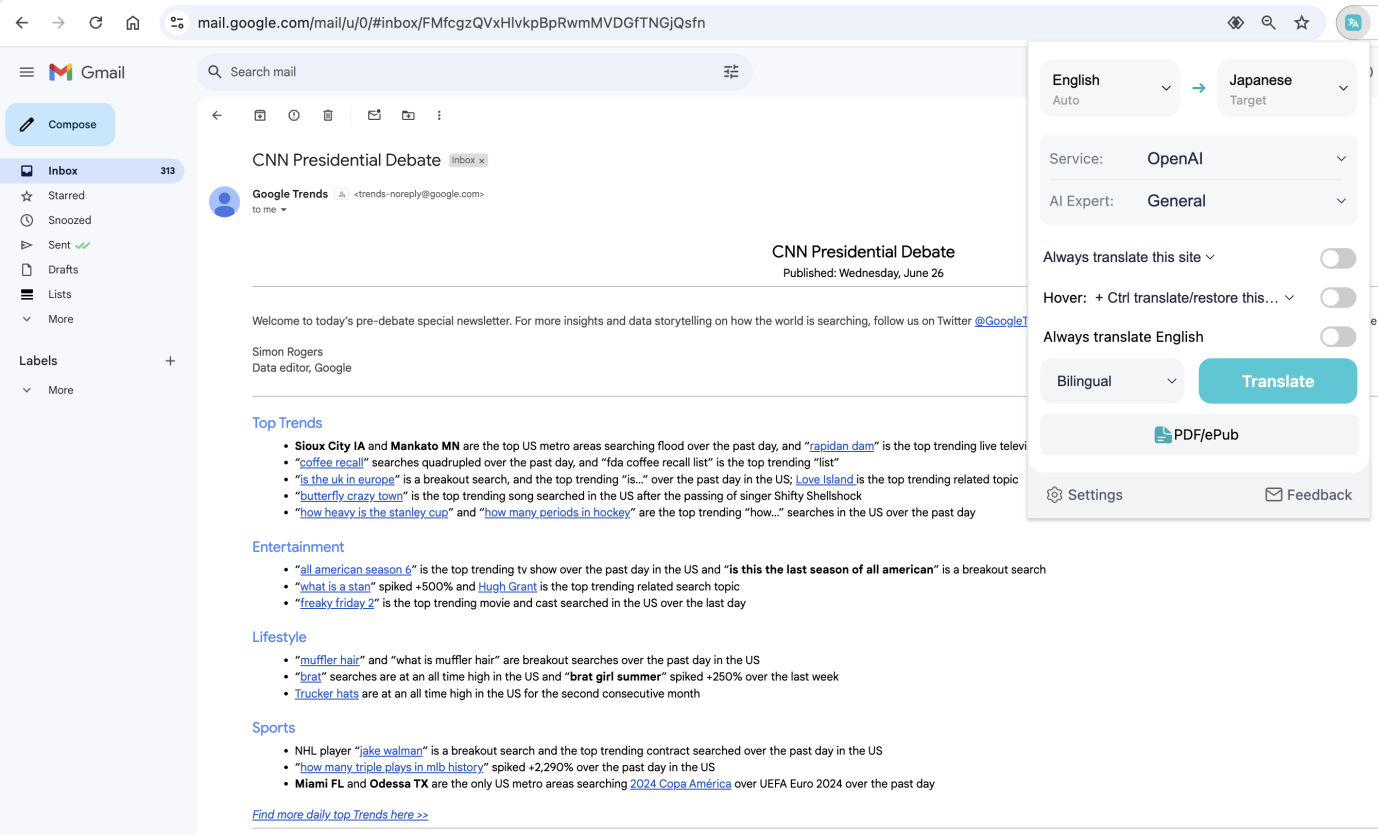
It's easy to use: simply search for "DeepTranslate" on the extension page and install it. Then just open the page you want to translate and press "ALT+A" for automatic translation. No troublesome clicking required. If you use web-based email like Gmail, you can master it immediately.
Since it translates in bilingual format, it's also appealing that you can study English while writing emails. It uses ChatGPT for translation, ensuring accurate translation of industry terminology.
It's a translation tool that will play a major role in business settings.
Basic Structure of English Emails
Now, let's look at how to write when composing emails yourself.
- Basic structure is the same as in Japan
- Address/salutation
- Greeting
- Main point
- Details and reasons
- Request to recipient
- Closing
Basic Structure is the Same as in Japan
Even though it involves English, don't overthink it. The email writing style is the same as in Japan. Basically, you write with the following structure:
- Address / Recipient
- Greeting
- Main point
- Details and reasons
- Request to recipient
- Closing
Finally, add your signature and you're done. You can see it's the same as writing emails to Japanese people, right?
Once you understand the structure, you just need to pay attention to individual writing styles.
Address / Recipient
For addresses and recipients, as in Japan, vary the formality based on your relationship with the business partner. For example:
- Dear Mr. / Ms. + Last name: Most formal form
- Dear + First name: For someone you have an established trust relationship with
- To Whom it may concern: Equivalent to "To whom it may concern" in Japanese
- Dear Colleagues,: For internal emails sent to multiple people at once
For women, use Ms. regardless of marital status, so please note this.
Greeting
Greetings are important even in English. Include a greeting at the beginning. Basically, structure it with the following flow:
- Greeting text
- Self-introduction
What to note is that English doesn't have a phrase equivalent to Japanese "otsukaresama desu" (thank you for your hard work). Therefore, use phrases that show consideration for the recipient, such as "How are you?" or "Did you have a good holiday?"
Main Point
After the greeting, state the main point. Regarding the main point, always follow these rules:
- Keep lines around 60-70 characters
- Don't write only in uppercase or lowercase
- Keep content concise
Business emails differ from letters in that conciseness is important. Make sure your communication intent is clear and write concise, readable sentences.
Details and Reasons
After presenting the main point, next provide details and reasons. Explain "why you're contacting them with this request."
For example, if you'll be delayed due to a holiday, use the following text:
- This is due to the Japanese official holiday.
You're conveying that you can't contact them because it's a holiday. After presenting the request, explain the reasons to make it easy for the recipient to understand.
Request to Recipient
While not always necessary, if you have any request for the recipient, include it after explaining details and reasons.
Since you're the one making the request, you might think polite expressions are needed, but they're not. Simply write the following points:
- Required action
- Deadline
If you're mindful of being polite yet concise, you'll naturally be able to write.
Closing
At the end of the email, include a closing phrase. Commonly used closings in business are:
- Sincerely,
- Best regards,
- Yours truly,
The key is to use formal, polished expressions. Just like with Japanese recipients, avoid casual expressions you might use with close friends.
How to Write English Business Emails
Now that you understand the general writing style, let's summarize. Here's an example:
Subject: Reminder: Overdue Payment for Invoice #12345
Dear John,
I hope this message finds you well. I am writing to kindly remind you that the payment for Invoice #12345, which was due on 30.9.2024, has not yet been received. As of today, the payment is 5 days overdue.
We understand that delays can happen, and we would appreciate it if you could let us know when we might expect the payment. If there are any issues or concerns regarding the invoice, please feel free to reach out so we can assist in resolving them.
Please find the invoice attached again for your reference. We kindly ask that the payment be made at your earliest convenience.
Thank you for your prompt attention to this matter.
Best regards, Taka Yamauchi
Anyone can create the above email by simply following the same flow as explained. Please use this as a reference.
3 Points to Keep in Mind When Writing English Emails

When writing English emails, be mindful of the following points, which differ from Japanese:
- Make subject lines concise and clear
- Use simple grammar
- Use expressions appropriate for the recipient
Make Subject Lines Concise and Clear
For emails, the subject line is like the face. Recipients look at the subject line to predict the email content. Everyone has had the experience of sending an email to the trash bin just by looking at the subject line.
Therefore, make sure to keep subject lines concise and clear. When it's clear what you're concerned about, communication will be smoother.
Use Simple Grammar
For English emails, aim for simple grammar. Japanese is a complex language, so writing with the same sensibility will result in hard-to-understand emails. Use simple, readable English at the level learned in junior high school.
Whether it's readable English for the recipient is what matters.
Use Expressions Appropriate for the Recipient
Just like in Japanese, using appropriate expressions for the recipient is important in English too. Be mindful of writing styles appropriate for the TPO (Time, Place, Occasion).
If you misjudge the distance with the recipient, it may lead to unnecessary trouble later. Since emotions are hard to convey through text alone, please be thorough in using appropriate expressions for the recipient.
Use Translation Apps When Unsure About Writing English Emails

English emails have a basic structure. When writing, be mindful of the structure and follow the rules.
If it's difficult, "DeepTranslate" is recommended. Since it translates in bilingual format, you can also check if you're writing as intended. If you're unsure about how to write English emails, please give it a try.