How to Choose a Vietnamese Translator? A Comparison of Translation Needs, Tools, and Methods (2026)

Updated on 2026-03-26

Why is the Demand for "Vietnamese Translation" Increasing in Taiwan?

In recent years, the demand for "Vietnamese translation" in Taiwan has risen significantly, driven by both demographic changes and industrial development.

The Increasing Number of Vietnamese Migrant Workers and New Immigrants Drives Translation Demand

The number of Vietnamese migrant workers and new immigrants continues to grow, driving the demand for Vietnamese translation. According to statistics from the National Immigration Agency of the Ministry of the Interior, Vietnamese nationals have become one of Taiwan's primary sources of foreign labor, widely distributed in industries such as manufacturing, construction, and home care. This background was also highlighted in a The News Lens special report, noting that Vietnam has recently surged to become one of Taiwan's largest sources of overseas students. Language differences make "Vietnamese translation" a rigid demand in both work and life.

Common usage scenarios in practice include:

  • Work Communication: Factory instructions, daily caregiving interactions, real-time dialogue between employers and employees.
  • Document Translation: Contracts, application documents, government forms, and other formal content (requiring "Chinese to Vietnamese" or "Vietnamese to Chinese" translation).
  • Daily Chat: Cross-language communication through messaging apps like LINE and Zalo.

At Taipei Station, migrant workers gather on weekends, reflecting the real need for Vietnamese translation and cross-language communication in Taiwan. (Source: Shutterstock)

Taiwan Companies Actively Expanding into Southeast Asian Markets Drive "Translating Vietnamese" Demand

In addition to individual users, corporate demand for "translating Vietnamese" is also growing rapidly. As Taiwan companies actively expand into Southeast Asian markets, particularly Vietnam:

  • Cross-border E-commerce needs translation for product pages and customer service content.
  • Market Expansion requires localized marketing materials and social media content.
  • Customer Service and Operations need to handle Vietnamese messages in real-time.

A common feature of these scenarios is: the need for fast, real-time, and understandable translation, rather than just simple text conversion.

Traditional translation methods are gradually failing to meet demand, leading more people to search for higher-efficiency solutions, such as real-time translation tools or bilingual translation plugins.

An online shopping scenario where a user browses cross-border e-commerce content, showing multi-language information and translation needs. (Source: Pexels)

Translate Vietnamese to Chinese Instantly with Bilingual Proofreading

Install DeepTranslate to read Vietnamese originals alongside Chinese translations simultaneously.

What are the Common Vietnamese Translation Needs? Which One are You?

When searching for "Vietnamese translation" related services, different users actually have completely different needs. Whether it's "Chinese to Vietnamese" or "Vietnamese to Chinese," understanding your usage scenario is key to choosing the most suitable translation method.

Here are the three most common types of Vietnamese translation needs:

Document and Content Translation (Formal Use)

These needs mainly cover "Chinese to Vietnamese" and "Vietnamese to Chinese" for formal or commercial scenarios.

Common applications include:

  • Business Document Translation: Contracts, quotations, partnership proposals.
  • Recruitment Content: Job descriptions, employee handbooks.
  • E-commerce Product Pages: Item descriptions, ad copy, platform listing content.

The focus of this type of translation is on accuracy and professionalism. Often, longer processing times are acceptable, making it suitable for human translation or AI-assisted human proofreading.

Information Understanding and Daily Reading (Light Demand)

If your need is "translating Vietnamese to Chinese," it’s often to quickly understand content rather than produce a formal text.

Common scenarios include:

  • Browsing Vietnamese social media posts or comments.
  • Reading Vietnamese news or articles.
  • Understanding simple messages or notifications.

The key to these needs is "getting the gist quickly." Word-for-word precision isn't required, but the translation results must be natural and easy to understand.

Real-time Communication and High-frequency Use (Key Scenarios for Efficiency)

The fastest-growing area is "real-time translation needs." These scenarios typically involve frequent interaction or long-term reading.

Typical situations include:

  • Real-time chatting with Vietnamese friends or colleagues on LINE or Zalo.
  • Handling Vietnamese customer service messages or order issues.
  • Browsing Vietnamese e-commerce sites, forums, or long-form content.

The biggest pain points for these needs are:

  • Constant copy-pasting for translation.
  • Inability to view original text and translation side-by-side.
  • Frequent interruptions during reading, leading to low efficiency.
Usage ScenarioTraditional MethodCommon ProblemsSuggested Solution
Document TranslationHuman TranslationHigh cost, time-consumingAI + Human Proofreading
Daily ReadingGoogle TranslateDisjointed, hard to compareBilingual View Plugin
Real-time CommunicationCopy-paste TranslationLow efficiency, frequent interruptionsBilingual View Plugin

Translate Vietnamese to Chinese Instantly with Bilingual Proofreading

Install DeepTranslate to read Vietnamese originals alongside Chinese translations simultaneously.

Comparison of Vietnamese Translation Methods (Which is Right for You?)

Choosing the right tool for different "Vietnamese translation" needs can significantly improve efficiency. Here’s a summary of the three most common translation methods, comparing them by accuracy, speed, and user experience.


Human Translation (Translation Agency)

Human translation is suitable for high-quality, formal scenarios like legal documents or commercial use.

Pros:

  • Accurate translation, natural phrasing.
  • Handles professional terminology and cultural nuances.

Cons:

  • Higher price.
  • Longer delivery time.

πŸ“Œ Market Price Reference: Approximately NT$1.3–2.2 per word (depending on content difficulty).

πŸ‘‰ Best for: Contracts, formal documents, brand content.

Human translation scene, where professional translators read physical documents and conduct translation work. (Source: Pexels)

Online Translation Tools (Google / AI)

This is the most common choice, suitable for simple, immediate translation needs.

Pros:

  • Free or low cost.
  • Fast translation speed.

Cons:

  • Limited context understanding, can result in unnatural phrasing.
  • Formatting and layout easily broken.
  • Requires repetitive copy-pasting, making the workflow non-fluid.
  • ❗ Most tools do not support bilingual side-by-side display, leading to lower reading efficiency.

πŸ‘‰ Best for: Short phrase translation, quick lookups.

Online translation usage scenario, where a user interacts with a digital interface for text translation and content understanding. (Source: iStockphoto)

Translate Vietnamese to Chinese Instantly with Bilingual Proofreading

Install DeepTranslate to read Vietnamese originals alongside Chinese translations simultaneously.

Bilingual Translation Plugins (The Best Efficiency Choice)

When you need long-term reading, frequent translation, or cross-language communication, traditional tools often fall short in efficiency. In these cases, a "bilingual translation plugin" is a more ideal solution.

Taking DeepTranslate as an example, its core advantages include:

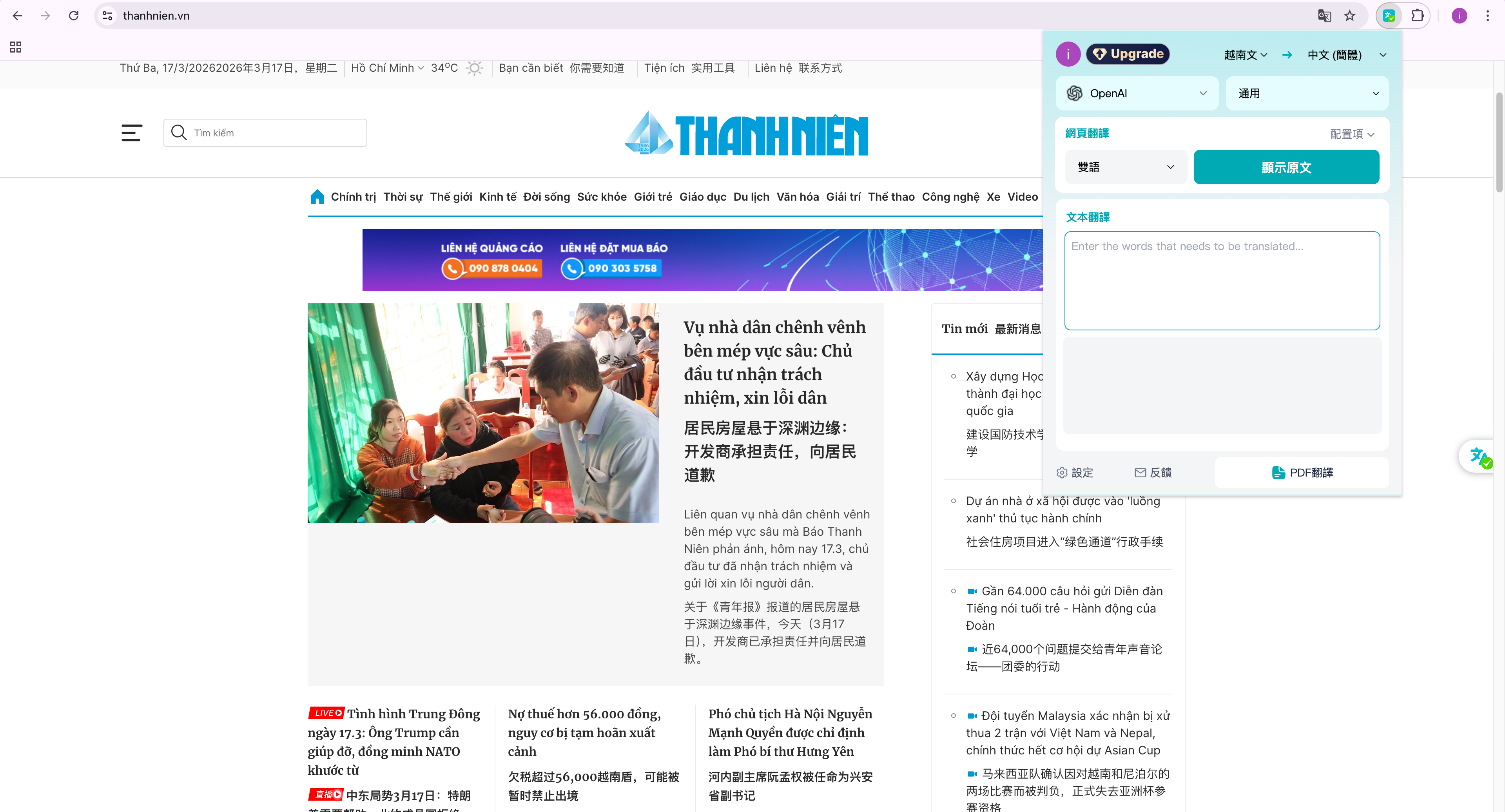
  • 🌐 Web Bilingual Side-by-side Display (Synchronized view of original + translation).
  • ⚑ One-click Full-page Translation, no copy-pasting required.
  • πŸ“– Preserves original layout for a more natural reading experience.
  • 🎯 Suitable for learning, work, and cross-border communication.

Particularly suitable for:

  • Reading Vietnamese news, forums, or websites.
  • Handling cross-border e-commerce product pages.
  • Real-time communication with Vietnamese users.

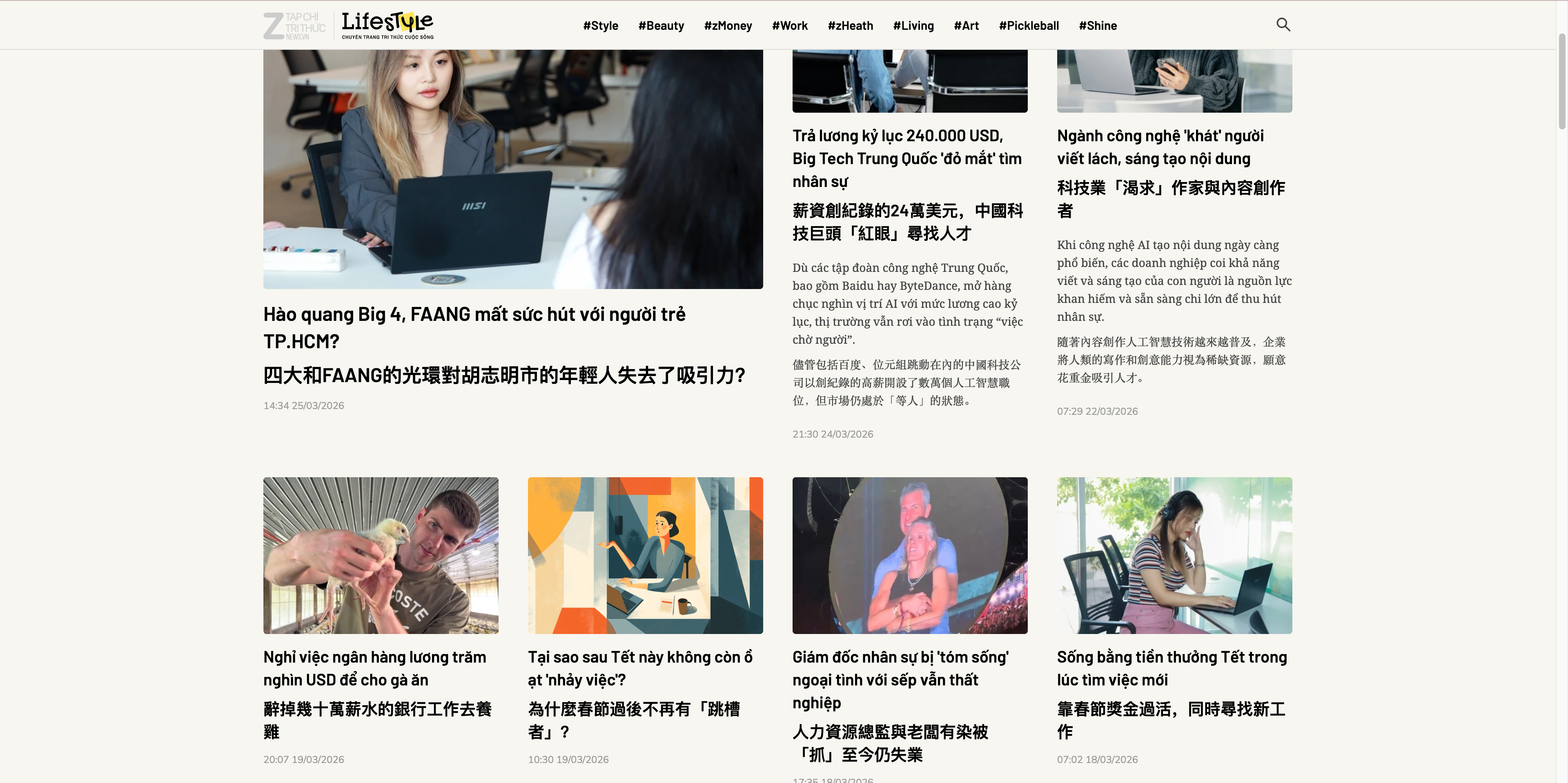
Screenshot of a translated Vietnamese webpage, where the DeepTranslate bilingual plugin demonstrates a side-by-side view of Vietnamese and Chinese for web translation.

Translate Vietnamese to Chinese Instantly with Bilingual Proofreading

Install DeepTranslate to read Vietnamese originals alongside Chinese translations simultaneously.

How to Choose the Right Vietnamese Translation Tool?

After understanding the different translation methods, the key is to choose based on your own needs. Here are practical criteria and suggestions.

Vietnamese Translation Tool Criteria

When selecting a "Vietnamese translation" tool, evaluate based on these points:

  • Does it support bilingual side-by-side display? (Crucial for comprehension efficiency).
  • Can it perform full-page translation? (Affects usage convenience).
  • Translation accuracy (especially for daily colloquialisms).
  • Is the workflow fluid? (Does it require constant tool switching?).

πŸ‘‰ Among these, "bilingual display" has become a key differentiator in boosting translation efficiency.

User TypeRecommended PlanReason
General UsersOnline Translation Tools (AI)Fast and convenient for occasional use
Language LearnersBilingual Translation PluginsAllows cross-referencing with the original to improve understanding and learning efficiency
Commercial UseHuman Translation + AI AssistanceEnsures professionalism and accuracy

Vietnamese Translation FAQ

Is Vietnamese translation accurate?

Overall, AI translation can handle most daily needs but still has certain limitations.

The main reasons are:

  • Vietnamese has Northern and Southern dialect differences.
  • Significant differences between colloquial and written language.
  • Some terms change depending on the context.

πŸ‘‰ Therefore, for important content or formal documents, human proofreading is still recommended.

What to Watch for in Chinese to Vietnamese Translation?

When performing "Chinese to Vietnamese translation," pay special attention to:

  • Word Order Differences: Vietnamese sentence structure differs from Chinese.
  • Honorific Use: Tone needs to be adjusted based on the target audience.
  • Business Terminology: Avoid literal translation; ensure it matches local idioms.

πŸ‘‰ Using a combination of tools and human proofreading is recommended to ensure naturalness and professionalism.

Translate Vietnamese to Chinese Instantly with Bilingual Proofreading

Install DeepTranslate to read Vietnamese originals alongside Chinese translations simultaneously.

For daily use, common free tools like Google Translate and DeepL can meet basic needs. However, if you need:

  • Long-term reading of foreign language websites.
  • To view original and translation simultaneously.
  • To avoid repetitive copy-pasting.

πŸ‘‰ Then a "bilingual translation plugin" like DeepTranslate is a more efficient choice.

For example, DeepTranslate:

  • Supports Chinese-Vietnamese bilingual comparison.
  • One-click full-page translation.
  • Boosts reading and comprehension efficiency.

DeepTranslate bilingual translation plugin showing a side-by-side view of a Vietnamese and Chinese webpage.

Conclusion: How to Choose Vietnamese Translation Most Effectively?

Summarizing the above analysis, here is how to quickly determine the best Vietnamese translation plan for you:

  • Simple Needs β†’ Use online translation tools (Fast and convenient).
  • Real-time Communication / Long-term Reading β†’ Use bilingual translation plugins (Highest efficiency).
  • Professional Documents β†’ Choose human translation (Best quality).

If you frequently need to read Vietnamese content or communicate with Vietnamese users, choosing the right tool can save significant time and improve efficiency.

Choose and download the browser plugin that suits your best.

logoDeepTranslate

Β© 2024 DeepTranslate All rights reserved